Punishment of the grave
From a very young age, many of us were introduced to death through a detailed and terrifying narrative about the punishment of the grave.
We were told that as soon as the last person leaves the burial site and the sound of footsteps fades, two angels descend into the grave. Their names: Munkar and Nakīr [Jami` at-Tirmidhi 1071]. The deceased is forced to sit up, despite the body being lifeless and buried beneath the earth.
Then the interrogation begins.
Who is your Lord?
What is your religion?
Who is your prophet?
If the answers are deemed incorrect, we were told that the grave immediately begins to close in. It tightens until the ribs interlock.
Then come the punishments described in detail.
We were told that snakes, scorpions or dragons (Sahīh Ibn Ḥibbān 3121) inhabit the grave. We were told of angels striking the deceased with iron hammers (Sahih al-Bukhari 1338), of screams that are heard by everything except humans and jinn. (Sahih al-Bukhari 6366) That the punishment repeats endlessly until the Day of Resurrection, whether that Day is near or thousands of years away.
And for those who answer correctly, we were told the opposite story: the grave expands as far as the eye can see, light fills the darkness, fragrant breezes enter from Paradise, and the deceased enjoys comfort while waiting for the final judgment.
All of this is presented to us as certain, detailed, and unavoidable.
Yet many of us carried unanswered questions:
If judgment is on the Day of Resurrection, why is punishment happening in the grave?
Why would God punish someone before their case is presented?
Why would the grave become a second court, separate from the Day of Judgment?
Why does the Qur’an speak so often about one Day, yet this belief adds another unseen phase of reward and punishment?
But these questions were usually brushed aside with one response: “This is what we were taught.”
Rarely were we encouraged to ask a more important question:
What does the Qur’an itself say about the state of the dead?
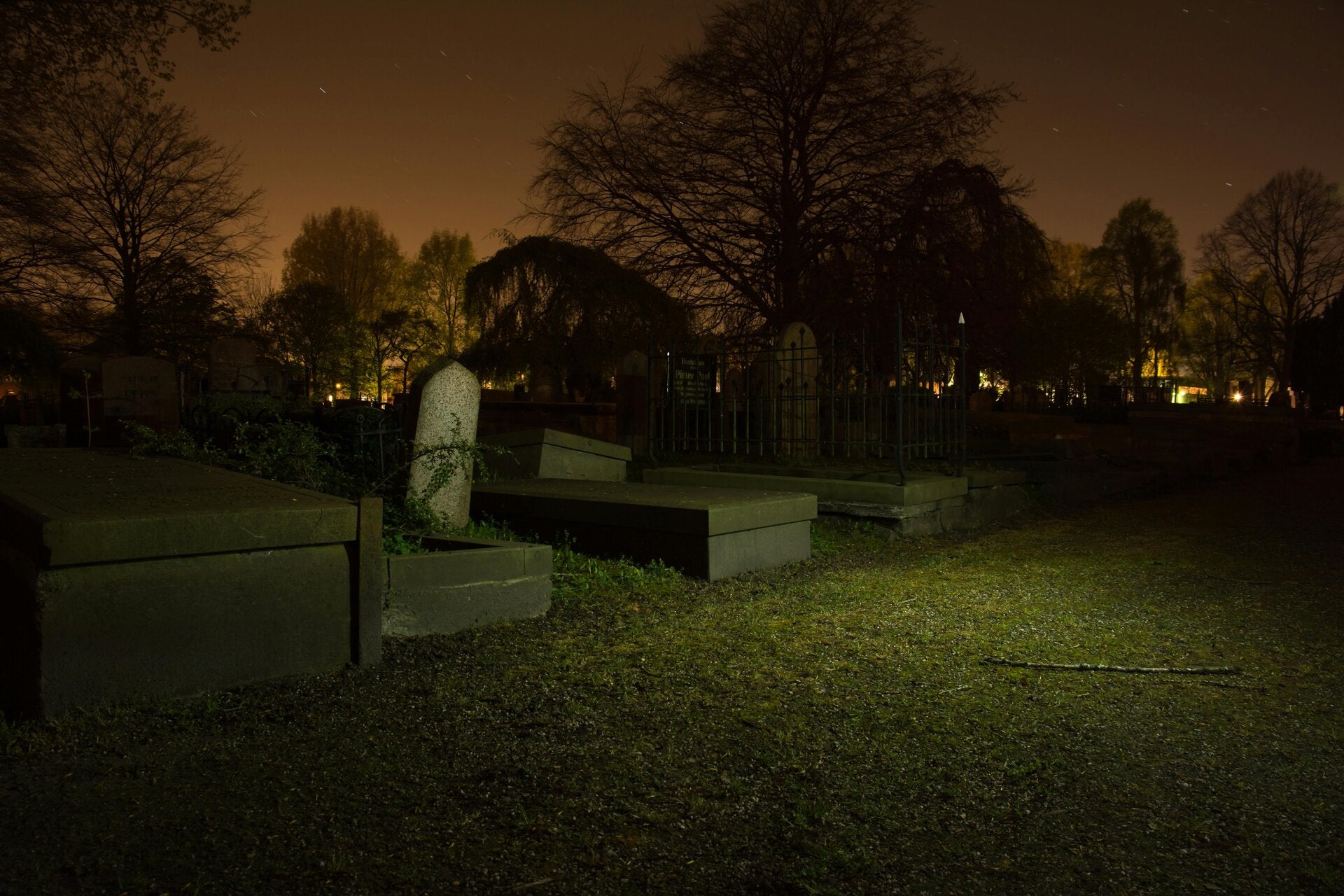
Before we turn to what the Qur’an says about death, we must acknowledge a fundamental truth: the Qur’an speaks for itself. It is complete, fully detailed, and nothing essential is left out.
As the Qur’an reminds us: “Shall I seek other than God as a judge, when He has revealed to you the Book fully detailed?” (6:114), a statement that everything necessary for guidance, understanding, and judgment has already been given. God assures us repeatedly: “We have not neglected anything in the Book” (6:38), declaring that there are no gaps, no hidden pieces, no missing truths waiting to be found elsewhere.
The Qur’an describes itself again as “an explanation of all things, guidance, and mercy” (16:89), a Book whose verses are “perfected, then explained in detail” (11:1), revealed to leave no question unanswered, no confusion unresolved. It confirms what came before it, clarifies what is hidden, and makes clear what is necessary: “This is a Book We have revealed, blessed, confirming what was before it” (6:92).
The Qur’an needs no supplement, no commentary, no hadith to make it whole. It is self-sufficient, precise, and absolute. There is nothing more to seek, nothing else required. If we are sincere, the Qur’an itself is enough.
And now, having established this, we are ready to see what the Qur’an actually says, or does not say, about a punishment in the grave.

As if no time had passed at all
The Qur’an doesn’t describe death as a second realm of reward or punishment, but as a state of sleep-like unconsciousness, followed by resurrection on the Day of Judgment. It emphasizes that awareness, perception, and accountability all begin only when God calls humanity back to life.
God says:
The day He will call you, and you will answer with His praise, and you will think that you tarried only a little.” 17:52
And the day the Hour strikes, the transgressors will swear that they had tarried but an hour; thus were they deluded. But those who were given the knowledge and belief will say: "You have tarried, according to the Book of God, until the Day of Resurrection, and this is the Day of Resurrection, but 'you did not know." 30:55-56
The key phrase here is “but you did not know.” This is a direct statement of unconsciousness. The Qur’an is careful to show that people do not perceive the passage of time; they are not undergoing an experience in the grave. Awareness begins only when God resurrects them.
The Qur’an reinforces this in multiple places:
And the day He gathers them will be as if they had tarried only an hour of the day: they will recognise one another; Those who denied the meeting with God will be the losers. They were not guided. 10:45
So be patient, as the messengers with resolve were patient, and do not be hasty regarding them. On the Day when they witness what they are promised, it will seem as if they had lasted only for an hour of a day. A proclamation: Will any be destroyed except the sinful people? 46:35
“On the day that they see it, it will be as though they had not tarried but the latter part of a day or the early part of it.” 79:46
In these verses, the Qur’an emphasizes that the dead are unaware of the passage of time, a state more akin to sleep than to conscious awareness, questioning, or torment.
Perhaps the clearest depiction comes from Surah Ya-Seen:
And in the forms will be blown and at once they will be rushing out from their tombs towards their Lord. They will say, 'Ahh! That is it for us! Who has raised us from our sleeping-place? This is what the All-Merciful promised us. The Messengers were telling the truth. 36:51-52
Notice the reaction of the resurrected. They do not say, “Who rescued us from punishment?” or “Who ended our suffering?” Instead, they ask, “Who raised us from our sleeping-place?” The Qur’an itself describes the state of the grave as sleep, not conscious trial, reward, or punishment.

Judgment belongs to the day of Judgment
The Qur’an consistently emphasizes that accountability occurs on one appointed day, the Day of Judgment, not before:
Every soul will taste death; and you will but be paid in full your rewards on the Day of Resurrection. And whoso is removed from the Fire and made to enter the Garden: he has won; and the life of this world is only the enjoyment of delusion. 3:185
God, there is no god save He. He will gather you all to the Day of Resurrection whereof there is no doubt; and who is more truthful than God in statement? 4:87
The day every soul will find what it did of good presented, and what it did of evil, it will wish there were between it and that a great distance.” And God warns you Himself; and God is kind to the servants. 3:30
This day is each soul rewarded for what it earned! No injustice this day!” God is swift in reckoning. 40:17
Judgment does not begin in the grave. It occurs openly, decisively, and in full awareness on the Day God raises humanity and gathers them all together. Only then do people truly stand before their Lord, conscious of themselves, their deeds, and the truth they once denied or upheld.
A call back to the Qur’an
The belief in punishment in the grave may be widespread, but popularity alone does not make something true.
When we sincerely study the Qur’an and reflect on its verses, just as God commands us, a clear and consistent message emerges:
Death is a passage where time goes unnoticed.
Judgment occurs on the Day appointed by God.
The Qur’an does not teach us to fear the grave or dread death itself. It calls us to prepare for the moment we stand before God, where every action, small or great, will be revealed. That encounter, according to the Qur’an, comes after we are resurrected, not while we lie in the earth.
